Indigo
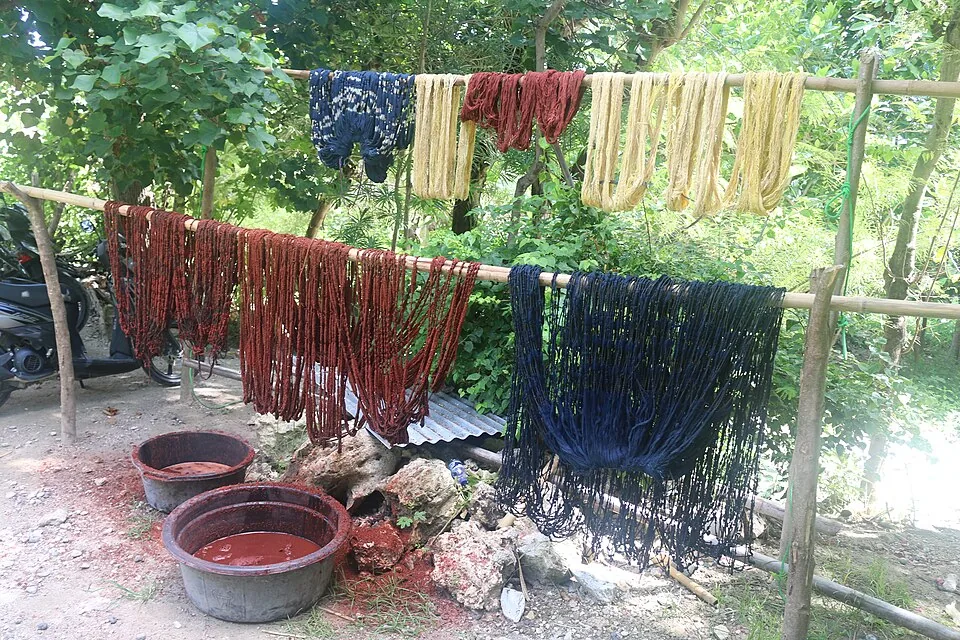
Indigo comes from fermented indigofera leaves. The process is long: leaves are soaked, the solution is oxidised, and the cloth is dipped again and again. The resulting blue is never simply blue—it has a depth that shifts with the light.
The more often it is dipped, the deeper the colour. No two lengths are identical, even from the same vat.
Soga
Soga produces the warm brown that has become one of the signature colours of Javanese batik. Its ingredients can come from bark, leaves, or a combination of both. Recipes are often passed down within families.
Because the materials are natural, soga can vary between seasons and makers. To us, that is not inconsistency. It is a sign that the cloth remains connected to the place where it was made.
Natural colour does not promise to stay the same. It promises to become deeper.
Time as an ingredient
Natural dyeing cannot be separated from the weather. A day that is too damp makes colour slow to dry; excessive heat can make it uneven. The dyer reads the sky before beginning.
This is why we do not chase uniformity. Wastra made with natural colour carries time within it—and that is a luxury no machine can produce.