Morning in Central Lombok
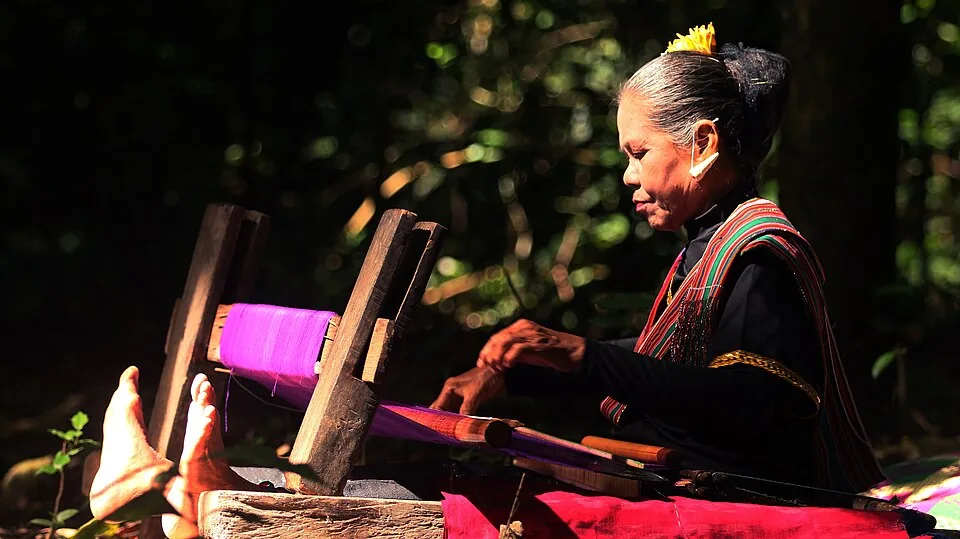
We arrived before the sun was too high. On the veranda of a wooden house, the loom was already set, and the sound of threads moving against each other was the first thing to greet us. There was no hurry. There was rhythm.
The woman weaving that day had been doing it since she was a teenager. She did not call her work art. For her, weaving was a household skill passed down, like cooking or tending a garden.
Motif as language
Every motif has a name and a story. Some speak of courage, some of fertility, some are known only within a particular family. We were asked not to rush to call them 'designs'.
This is where wastra differs from ordinary fabric. It holds social codes, prayers, and a community's way of seeing the world. When we select cloth for the collection, we choose not to erase those codes.
Cloth made by hand is never truly finished. It keeps changing with the person who wears it.
What cannot be rushed
One length can take two to six weeks, depending on the complexity of the motif and the weather—because natural dyeing depends on heat and wind. There is no fast-forward button.
We came home with cloth that is not perfect. A line runs slightly askew, a colour is not entirely even. These are not flaws. They are evidence that someone spent their time making it.